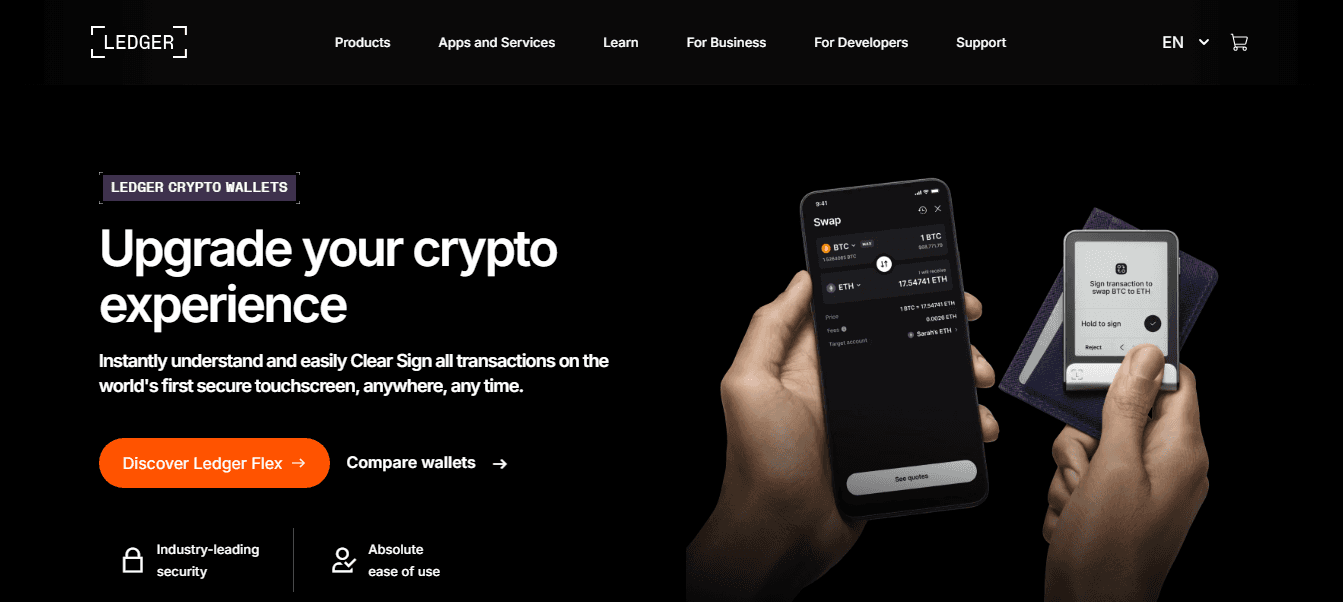
Ledger Login: A Fresh Look at Secure Access Through Ledger Hardware Wallets
As digital currencies continue to spread across the global financial landscape, secure access to crypto accounts has never been more critical. With millions of users holding valuable assets on the blockchain, protecting those assets from unauthorized access is a top priority. Ledger, known for its hardware wallets, offers a unique login approach that puts security into the hands of the user rather than trusting passwords or centralized systems. This method is commonly referred to as “Ledger Login,” though it operates very differently from the login systems most people are familiar with.
This guide explores what Ledger Login means, how it works, why it’s more secure than traditional access methods, and the best ways to use it effectively.
1. What Is Ledger Login? A Different Kind of Authentication
Ledger Login is not a username-and-password procedure. Instead, it is a secure, hardware-based authentication process that uses a Ledger hardware wallet to prove ownership of crypto accounts. When a user connects their Ledger device to Ledger Live—the official management application—they unlock access by entering a PIN on the physical device.
There’s no typing of private keys, no passwords stored online, and no centralized account that can be hacked. Your Ledger device is the gateway, and your PIN acts as the key that unlocks it. This makes the login system extremely resistant to most forms of digital attack.
Ledger Login bridges convenience and safety by allowing users to interact with their digital assets while keeping their private keys offline at all times.
2. Why Ledger Avoids Traditional Password-Based Systems
Passwords have become one of the weakest points of digital security. They are frequently reused, easy to guess, stored insecurely, stolen through phishing, or leaked through data breaches. Even strong passwords can be compromised if users fall victim to social engineering attacks.
Ledger avoids this by removing passwords from the equation. Instead, authentication is tied to the physical hardware wallet. The idea is simple: if you can unlock the device, you are the rightful owner. If you don’t have the device, you can’t access the account—no matter what information you might know.
This eliminates:
Password database hacks
Credential stuffing attacks
Phishing attempts that target login pages
Keylogging malware that captures typed passwords
Remote account takeovers
Ledger’s model shifts security from the cloud to a user-controlled device.
3. How the Ledger Login Process Works Step-by-Step
Ledger Login is designed to be both secure and user-friendly. The actual flow is straightforward, though the protection behind it is sophisticated.
Step 1: Connect the Device
On desktop, the device is connected through a USB cable. On mobile, compatible models can pair using Bluetooth. Once connected, Ledger Live will attempt to detect the device.
Step 2: Enter the PIN
You unlock the device by entering your PIN on its physical buttons. This step is the foundation of the login experience. Only by correctly entering the PIN can you access the wallet’s internal functions.
Step 3: Launch Ledger Live
When the Ledger device is unlocked, you open Ledger Live. The application reads the device’s public information—not your private keys—and checks that everything is properly set up.
Step 4: App and Device Verification
Ledger Live may ask you to approve a message or verify a code shown on your device. This confirms that you’re communicating with your real Ledger and not an unauthorized copy.
Step 5: Access Granted
Once verification is complete, your portfolio is displayed. You can check balances, review digital assets, manage accounts, and perform transactions.
No login credentials are stored online. No passwords are exchanged. Everything revolves around the secure hardware.
4. The Security Framework Behind Ledger Login
The strength of Ledger Login lies in a layered security approach that combines specialized hardware with cryptographic processes.
Secure Element Chip
Ledger devices contain a secure chip designed to protect sensitive information. This chip is resistant to tampering, making it extremely difficult for attackers to extract private keys—even with physical access.
Offline Private Key Storage
Unlike software wallets, private keys never leave the secure chip. All important operations are performed internally, with only signed data sent to connected apps.
Physical Confirmation
Sensitive actions require confirmation on the device itself. This ensures that even if malware infects the user’s computer, transactions cannot be confirmed without manual approval.
PIN Protection
The PIN adds another layer of defense. Repeated incorrect entries will lock the device and eventually trigger a reset, preventing brute-force attempts.
Recovery Phrase Design
If the device is ever damaged or lost, a recovery phrase allows users to restore access on a new Ledger device. Because this phrase is never stored digitally, it remains out of reach from attackers.
Through these mechanisms, Ledger Login transforms the traditional concept of logging in into a secure physical authentication process.
5. Ledger Login and Transactions: How Approval Works
Once logged into Ledger Live, users can initiate transfers or interact with blockchain networks. But a second layer of authentication is required before a transaction is finalized.
This ensures that logging in alone is not enough to move funds.
Here’s how transaction approval works:
A user sets up a transaction inside Ledger Live.
The transaction details are sent to the Ledger device for review.
The user reads the destination address, amount, and fees directly on the device’s screen.
The device asks for confirmation through button presses.
Only after approval does the device create a cryptographic signature.
Ledger Live broadcasts the signed transaction to the blockchain.
This mandatory confirmation step prevents unauthorized transfers even if a device owner logs in on a compromised computer.
6. Ledger Login for Web3 and Decentralized Apps
Web3 platforms allow users to interact with smart contracts, decentralized exchanges, NFT marketplaces, and more. Many rely on browser wallets that store private keys in software, which can be risky.
Ledger Login provides a safer alternative by requiring hardware-level confirmation.
When connecting a Ledger device to Web3 interfaces:
The private key remains offline.
Smart contract calls must be approved on the Ledger device.
Fraudulent sites cannot initiate transactions without your confirmation.
Even if a dApp interface has security vulnerabilities, your hardware wallet protects your assets.
This makes hardware-based login ideal for anyone working with DeFi platforms or NFTs.
7. Common Problems Users Encounter During Ledger Login
Although Ledger Login is usually smooth, occasional issues arise. Some of the most frequent challenges include:
Connection Errors
Faulty cables, incompatible USB ports, or outdated app versions can prevent Ledger Live from detecting the device.
Device Locked
If the device is not unlocked with a PIN, Ledger Live cannot proceed with authentication.
Firmware Outdated
Older firmware can interfere with the login process, making updates essential.
Bluetooth Pairing Conflicts
For wireless models, interference or incorrect pairing steps may cause temporary disruptions.
Sync Delays
Portfolio data may take time to refresh due to network congestion or temporary blockchain issues.
Most issues are easily resolved through simple troubleshooting steps such as updating firmware, restarting the app, or reconnecting the device.
8. Best Practices for a Safe Ledger Login Experience
Security is strongest when users follow good habits. Some important practices include:
Store your recovery phrase offline where no one can access it.
Update your device firmware and Ledger Live regularly.
Only download Ledger software from official sources, never from email attachments or random sites.
Avoid using public computers or shared networks when accessing Ledger Live.
Verify all transaction details on the Ledger screen, not on the computer or phone.
Keep your PIN private and never write it in obvious places.
These simple rules dramatically increase safety.
9. The Future of Secure Access: Where Ledger Login Is Headed
The digital asset ecosystem continues to evolve. As technology advances, Ledger is likely to expand its authentication features while keeping the hardware-first philosophy intact. Future improvements may include smoother mobile experiences, more integrations with decentralized applications, enhanced biometric support for the Ledger Live app, and faster multi-network synchronization.
No matter what changes come, the fundamental principle of Ledger Login—security anchored in hardware—will remain a central part of the Ledger ecosystem.
Conclusion
Ledger Login represents a powerful shift away from online passwords and centralized authentication systems. Instead of trusting external servers, users trust a physical device they control. With private keys stored offline, mandatory physical confirmations, and secure hardware engineering, the Ledger login process creates a highly resilient barrier against digital threats.
Whether you are managing a long-term crypto portfolio, interacting with Web3 platforms, or simply securing your digital wealth, Ledger Login provides a dependable, user-centered solution for keeping your assets safe.