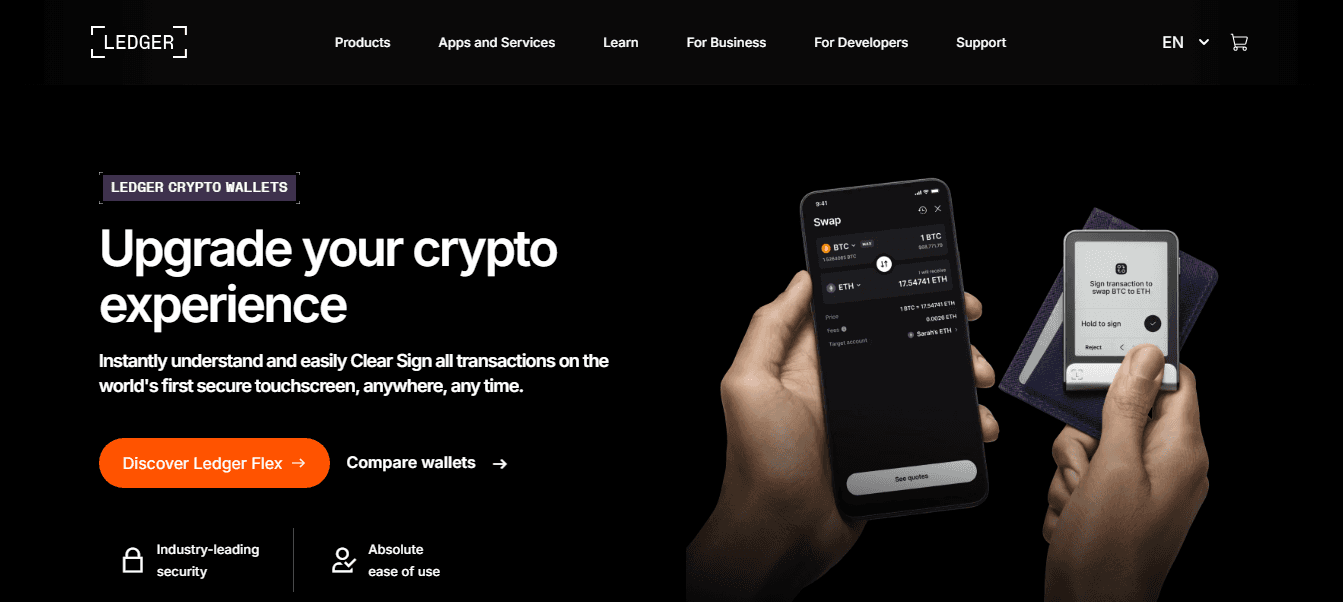
Ledger Login: A Detailed Overview of Secure Access Through Ledger Hardware Wallets
In the world of digital assets, one of the biggest challenges users face is securing their accounts without sacrificing convenience. Cryptocurrency wallets, decentralized apps, NFT platforms, and blockchain networks all require strong protection at the point of entry. This is where the idea of “Ledger Login” stands out. Instead of relying on passwords, cloud storage, or centralized credentials, Ledger uses a hardware-based authentication method that prioritizes user control and offline security.
This guide explores the nature of Ledger Login, how it functions, why it is considered one of the safest approaches for accessing crypto accounts, and what users need to know to get the most out of the system.
1. What Ledger Login Really Means
Unlike traditional online accounts where users type in a password or rely on two-factor authentication, Ledger Login is based on physical ownership of a Ledger hardware wallet. Your hardware device acts as your key to the blockchain world. When connected to Ledger Live—the companion application—it verifies your identity not through a password, but through cryptographic validation inside the secure hardware chip.
With Ledger Login, you essentially “prove” you are the rightful owner by unlocking the device with your PIN. This process provides access to your crypto accounts without ever revealing your private keys to your computer or the internet.
There is no central server holding your information. There is no online login page to hack. The authentication lives entirely in your hands.
2. Why Ledger Login Is Different from Regular Password Sign-in
Most people are used to password-based logins. But passwords come with inherent vulnerabilities: they can be guessed, stolen, leaked, or intercepted. Even with additional layers like SMS codes or authentication apps, the fundamental issue remains—passwords exist online.
Ledger removes this weak link. Instead of logging in through a digital identifier, you authenticate by physically connecting your Ledger device and entering your PIN. The PIN unlocks your device, but your private keys never leave it. Everything happens inside the hardware wallet.
The result is a login process that eliminates:
Password theft
Remote hacking
Phishing tricks
Malware that captures keystrokes
Account takeover attempts
Ledger Login is built on the principle that private keys should never touch the online environment.
3. Step-by-Step: How the Ledger Login Process Works
Even though Ledger Login is exceptionally secure, the actual process is simple and intuitive. Here is the experience from start to finish:
Step 1: Connect or Pair Your Ledger Device
On desktop, this means connecting your Ledger hardware wallet through a USB cable. On mobile, it may involve pairing a Ledger device using Bluetooth, depending on the model.
Step 2: Unlock the Device with Your PIN
Your PIN code is your personal access key. Only you know it, and it is required to unlock the secure element inside the device. Without the PIN, nothing can be accessed or signed.
Step 3: Launch Ledger Live
Ledger Live is the gateway through which you view and interact with your digital assets. When you open the app, it checks for the connected device and confirms that it’s unlocked. This is the core of the login process.
Step 4: Ledger Live Verifies the Device
Sometimes the app will ask you to confirm that the device detected is indeed yours. You may be prompted to compare a code on the screen with the one shown on your Ledger device.
Step 5: Full Access to Your Crypto Accounts
Once authenticated, you can see your portfolio, check balances, review transaction history, and take actions such as sending crypto, receiving assets, staking, or interacting with decentralized applications.
Because the entire login hinges on a hardware wallet, no one can fake or bypass this process.
4. The Security Architecture Behind Ledger Login
Several layers of protection make Ledger Login more secure than standard digital authentication systems.
Secure Element Chip
Ledger devices use a specialized secure chip similar to what is used in passports and high-security ID cards. This chip isolates your private keys and ensures no one can extract them—even with advanced physical attacks.
Offline Key Storage
Your private keys never appear on your computer, never enter the cloud, and never leave the device. Ledger Login only uses cryptographic signatures generated inside the hardware to confirm your identity.
Manual Button Confirmation
Any sensitive operation—transactions, staking actions, or Web3 interactions—must be confirmed on the device itself. This prevents malware on your computer from tricking you into sending assets without your knowledge.
PIN-Based Protection
Your device locks itself after multiple incorrect PIN attempts, preventing unauthorized access even if the device is stolen.
Recovery Phrase Control
Only someone with your recovery phrase can restore your wallet on a new device, making it the ultimate ownership key.
Together, these features create a login method that is exceptionally resistant to hacking attempts.
5. Logging In to Perform Transactions
The login process doesn’t stop at simply opening Ledger Live. When you try to send assets or perform any blockchain operation, another layer of verification takes place.
Here’s what happens:
You create a transaction request in Ledger Live.
The transaction details are sent to your Ledger hardware wallet.
You review the destination address, amount, and fees on the device screen.
You approve or reject the transaction directly on the device.
Only after approval does the wallet generate a cryptographic signature.
Ledger Live broadcasts the signed transaction to the blockchain network.
This ensures maximum accuracy and eliminates accidental or malicious transfers.
6. Using Ledger Login for Web3 and Decentralized Apps
Decentralized apps typically require connecting a wallet extension. Browser-based wallets store private keys in the software layer, making them vulnerable to phishing sites and malicious scripts. Ledger Login offers a safer alternative.
When using Web3 platforms with Ledger:
Your private keys stay protected inside the hardware device.
Smart contract interactions must be approved physically.
Even if a website is compromised, it cannot sign transactions without your device confirmation.
Users who engage in yield farming, liquidity pools, NFT minting, and decentralized trading benefit greatly from this extra security barrier.
7. Common Issues During Ledger Login and How to Fix Them
Even with a well-designed system, occasional login challenges may appear. Most issues are minor and easy to resolve.
Device Not Recognized
This can happen when:
Using a faulty or charging-only cable
USB ports are blocked or malfunctioning
Ledger Live needs an update
The device is still locked
Switching cables, restarting Ledger Live, or unlocking the device typically resolves this.
Bluetooth Pairing Problems
For Bluetooth-enabled models, interference, outdated firmware, or incorrect pairing steps can cause login delays.
Ledger Live Sync Issues
Sometimes the app cannot update portfolio information due to temporary network congestion. Refreshing the cache or restarting helps.
Incorrect PIN Attempts
Entering the wrong PIN multiple times will reset the device for security reasons. Your recovery phrase can restore access if needed.
In most cases, troubleshooting is simple and guided by clear device or app prompts.
8. Best Practices for Maintaining Safe Ledger Login
To get the most secure experience, users should follow essential precautions:
Never share or digitally store your recovery phrase.
Use only verified Ledger software and genuine devices.
Keep firmware and Ledger Live updated.
Verify all transaction details on the device screen—not the computer.
Avoid entering your PIN in public places.
Store your device safely when not in use.
These practices help maintain the high level of security that Ledger Login is built upon.
9. The Growing Role of Ledger Login in Modern Crypto Use
As more people migrate from exchanges to self-custody, hardware-based login methods like Ledger’s are becoming increasingly important. Users who value control over their funds prefer systems that remove reliance on third-party custodians or vulnerable passwords.
Future developments may bring:
Even more streamlined login flows
Enhanced mobile support
Additional integrations with Web3 ecosystems
Improved blockchain synchronization
Advanced recovery solutions
Regardless of new features, the core principle will remain the same—security anchored in hardware, not software.
Conclusion
Ledger Login provides one of the strongest authentication systems in the crypto space by combining secure offline key storage, hardware-based verification, and clear physical confirmation steps. Instead of trusting remote servers or fragile passwords, users rely on a device that keeps private keys safely sealed and under their control.
Whether accessing your portfolio, conducting transactions, or interacting with decentralized applications, Ledger Login offers confidence, clarity, and high-level protection. For anyone serious about securing their digital assets, this method stands out as one of the most reliable solutions available today.